What to build first in an MVP (and what to leave out)

Most first versions fail because they try to do too much. An MVP (minimum viable product) is the smallest thing that lets a real user solve a real problem so you can learn from it.
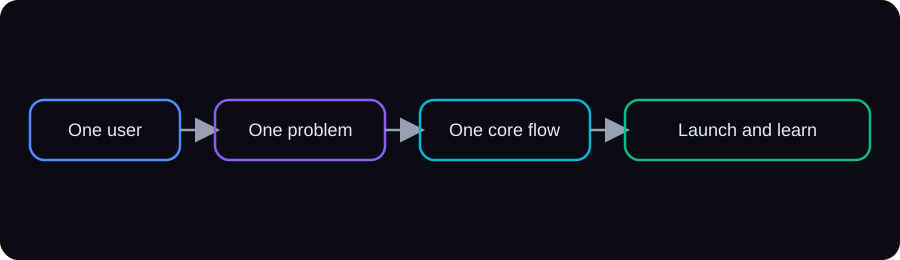
Start with one person and one problem
Describe your first user in a sentence: "A salon owner who loses bookings because they miss calls." Then describe the one problem you solve for them. If you cannot say it in two sentences, it is too big.
Find the core flow
Write the shortest path from "user arrives" to "user gets value". For a booking tool it might be: sign up, connect calendar, share booking link, receive first booking. That is your MVP.
What to leave out for now
- Extra user roles and permissions
- Settings pages for every option
- Reports and dashboards
- Integrations nobody has asked for
- Perfect design polish
You can add these once people use the core flow.
What you cannot skip
- Sign-in and basic security
- Payments, if charging is part of the test
- A way to collect feedback
- Basic error handling and backups
Set a learning goal
Decide what you need to learn: "Will 10 salon owners use it weekly?" or "Will 5 people pay?" Then build only what is needed to find out.
Plan in weeks, not months
A focused MVP can often be built in a few weeks. If your scope needs months, cut it again.
After launch
Talk to your first users. Watch where they get stuck. Fix those things before adding features.
We build MVPs in React and Next.js with authentication, payments and data: see MVP development.
Need a hand with this?
Book a free call or send a short brief and Ajex Digital will suggest a sensible first step.